

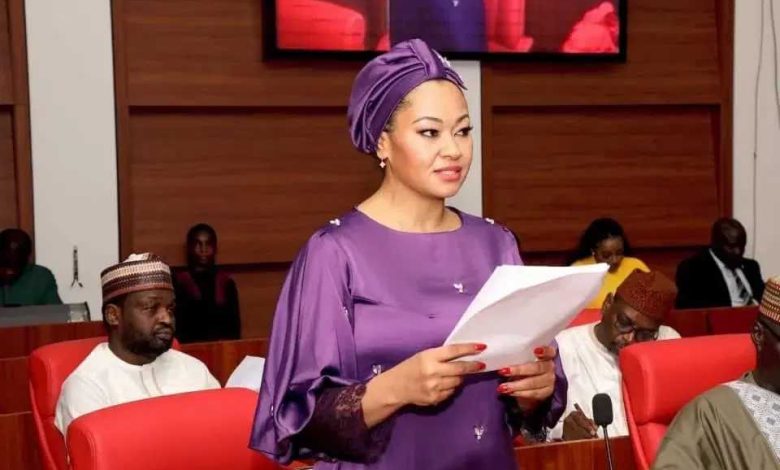
Senator Natasha Akpoti-Uduaghan, representing Kogi Central Senatorial District, expressed that she was not allowed to contribute during the screening of Professor Joash Ojo Amupitan, who was approved as the Chairman of the Independent National Electoral Commission (INEC).
She shared this information on Thursday during a live session on Facebook, providing updates to Nigerians and her constituents about the developments in the Red Chamber.
“I raised my hand, but I was not selected to speak. It’s understandable as the Senate President, Godswill Akpabio, has the prerogative to choose who speaks. All I wanted to say was that I was impressed with Professor Joash Ojo Amupitan’s credentials. His resume was quite impressive, contrary to the information circulating on social media. Also, this is the first time an indigene of Kogi State has been nominated as the INEC Chairman.”
Senator Akpoti-Uduaghan further highlighted that Professor Amupitan stated his intention to deploy electronic methods, particularly drones, to monitor the elections in 2027.
“The mention of drones caught my attention because, three months ago, while we were illegally suspended, we facilitated the training of 80 individuals in the use of drones, and we provided each of them with DGI drones. The DGI drones are among the best in the world. We appreciate that he is considering using drones for election monitoring, and Kogi Central is ready to provide the list of these 80 individuals so they can partner with the Police Force or INEC.”
Using the September 12, 2025, elections in Nepal, which utilised the Discord application as a reference, Senator Natasha inquired whether it would be better for Nigerians to vote from the comfort of their homes using their National Identification Number (NIN), voter’s card, or Bank Verification Number (BVN) for verification. She argued that this approach would mitigate the risks associated with insecurity and the deployment of election materials to rural areas that endanger lives. She emphasised that embracing technology could also help reduce the high costs of elections, allowing saved funds to be redirected towards healthcare, infrastructure, and other pressing needs for the populace.
“If Nigerians can vote for Big Brother and their votes are protected, we can also implement what Rwanda and other African nations have done. The advantage of going digital is that it would allow Nigerians in the diaspora to participate in voting. Wherever Nigerians are, they can be accredited using their voter’s card and cast their votes. Some platforms are not vulnerable to hacking, which could significantly reduce stress, protect lives, and enable the Nigerian Army to focus on other areas besides securing voters. So, how prepared is Professor Amupitan to embrace full digital voting to avoid wasting time and money on deploying personnel and printing materials for the 2027 elections?”
She expressed her satisfaction with Professor Amupitan’s nomination, despite initially being sceptical due to negative stories about his date of birth and primary education. After reviewing his Curriculum Vitae, she felt reassured about his appointment.