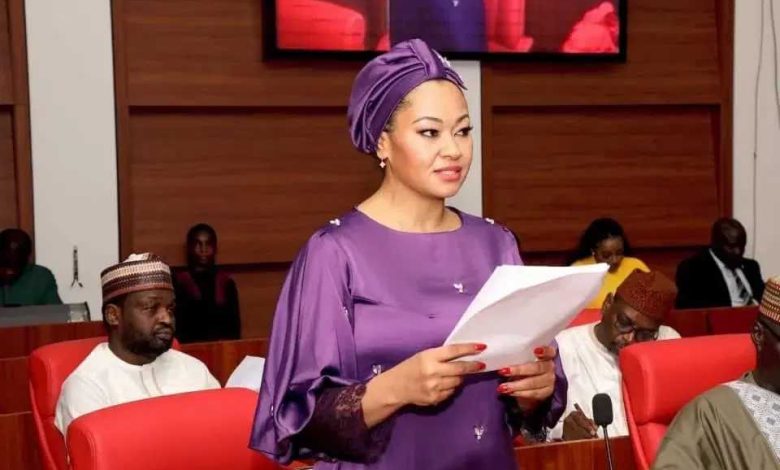

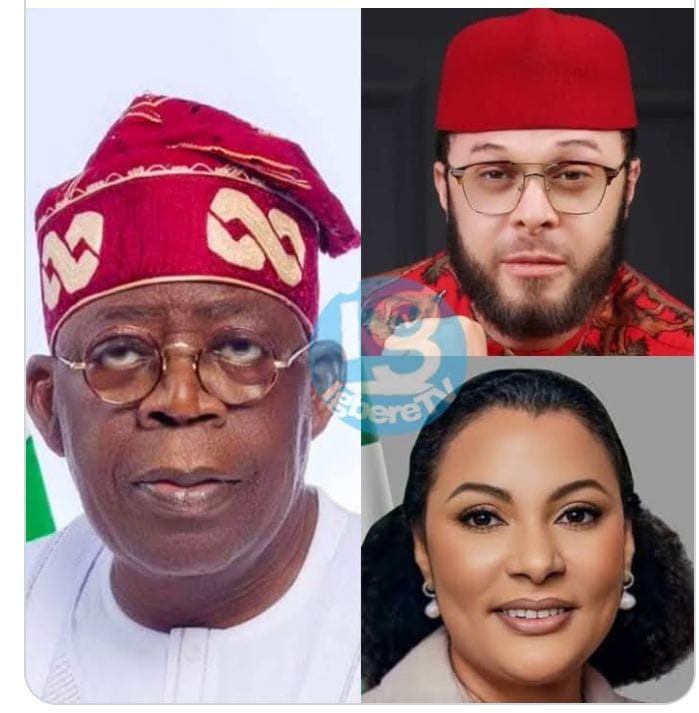
President Bola Tinubu has removed Dr. Doris Uzoka-Anite as Minister of State for Finance and appointed Mr. Taiwo Oyedele as her replacement, in a dramatic cabinet reshuffle that political observers are linking to last week’s explosive budget defence hearing.
The development comes exactly seven days after Hon. Alex Mascot Ikwechegh, member representing Aba North/Aba South Federal Constituency, confronted the Minister of Finance over ₦1.15 trillion in approved capital funds that remain undisbursed—with capital projects across Nigeria sitting at zero percent execution.
It was Wednesday, February 25th, when Hon. Ikwechegh—a member of the House Committee on Aids and Loans—took the floor at the Appropriation Committee’s budget defence session and began firing questions that would ultimately reverberate all the way to Aso Rock.
Armed with documents from his committee assignment, he laid out a disturbing pattern:
$1.2 billion Digital infrastructure
$500 million Economic stimulus
$500 million MSME support (Dec 2025)
$500 million (AfDB) Economic governance/Energy transition Approved Nov 2025
$21M + ¥15B + €4B Recent executive loan request
₦1.15 trillion 30% of 2025 capital budget Approved but Not Disbursed
Despite this avalanche of borrowed money and record-breaking revenues from agencies like FIRS and Customs, Hon. Ikwechegh noted that capital projects remained at zero disbursement.
“With all these funds put together… I want you to enlighten us on why the 2024 budget is yet to be fully implemented, and why the 2025 budget has only been funded 34%—most of which is recurrent expenditure.”
Then came the question that silenced the room:
“I want you to enlighten us on why our capital projects still remain at zero. Talking about our country. This is our country. Are you not in Nigeria? Why the capital of the Nigerian government remains at zero in 2026?”
When pressed, Minister of Finance Wale Edun shifted responsibility to his Minister of State, Doris Uzoka-Anite, claiming she handled disbursements.
The committee adjourned to Thursday, February 26th, summoning Uzoka-Anite to provide answers.
She appeared. She confirmed that ₦1.15 trillion was indeed approved. But she claimed “pre-disbursement conditions” had not been met by some ministries.
Hon. Ikwechegh was ready. He rose and asked:
“Mr. Chairman, can the minister tell this committee which specific ministry met all conditions and still did not receive funding? If none existed, why was ₦1.15 trillion approved when the government knew conditions weren’t met?”
The minister could not name a single ministry.
The room understood the implication: either the money was approved without proper verification, or it was being withheld without justification.
Speaking after the hearing, Hon. Ikwechegh framed the issue in stark legal terms:
“If this infraction is identified, it means there has been misappropriation of funds—which is a crime.”
At 3:30 PM on Tuesday, March 3rd—exactly one week after Hon. Ikwechegh’s initial interrogation—the presidency announced a cabinet reshuffle.
According to a statement by Bayo Onanuga, Special Adviser to the President on Information and Strategy, Uzoka-Anite has been moved to the Ministry of Budget and National Planning as Minister of State.
It is her third portfolio in two years, having previously served as Minister of Trade and Investment before her appointment to Finance.
Replacing her is Taiwo Oyedele, the 50-year-old economist and tax expert who chaired the Presidential Committee on Fiscal Policy and Tax Reforms. Oyedele, a 22-year veteran of PwC who rose to become Fiscal Policy Partner and Africa Tax Leader, now awaits Senate confirmation.
The official statement made no mention of the budget defence hearing or Hon. Ikwechegh’s interrogation.
But the timeline has left political observers drawing their own conclusions.
For ordinary Nigerians, this sequence of events demonstrates something rare: accountability in action.
A lawmaker asked questions. A minister could not answer. One week later, that minister was removed from her portfolio.
Hon. Ikwechegh’s constituents in Aba North and Aba South—a commercial hub—now see their representative making waves at the highest level.
When he asked, “Why the capital of the Nigerian government remains at zero in 2026?” —he was asking for the roads, hospitals, and schools that never got built despite approved funds.
Now, because of his questions, the nation is watching. And the government has responded.
Despite the cabinet reshuffle, the core question Hon. Ikwechegh raised remains unanswered:
Where is the ₦1.15 trillion?
If funds were approved by the National Assembly, borrowed from international lenders, and generated by revenue agencies—yet never reached the capital projects they were intended for—the legal implications are unavoidable.
As Hon. Ikwechegh himself stated:
“If this infraction is identified, it means there has been misappropriation of funds—which is a crime.”
The removal of a minister does not erase that question. It merely raises another:
Will there be further accountability