Nasir El- Rufai Is Legally Detained Not Illegally- Femi Falana

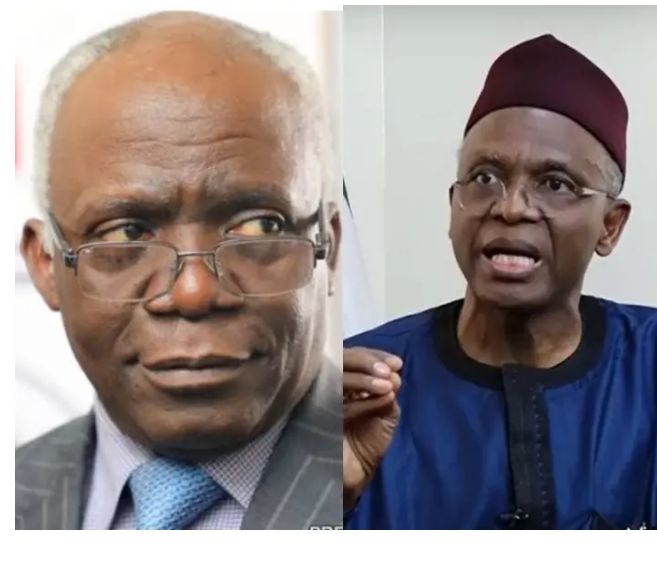
Femi Falana, a Senior Advocate of Nigeria (SAN), has addressed concerns over the detention of former Governor Mallam Nasir El-Rufai

Speaking in an interview with The Legacy Series, Falana said some people are claiming that El-Rufai is being held illegally. He stated that the detention is actually legal under Nigerian law.

Falana explained that Section 293 of the Administration of Criminal Justice Act empowers a magistrate, based on an ex parte application by law enforcement agency, to detain a Nigerian for 14 days and it is renewable up to 42 days.

In Falana’s words: “People are complaining that Mallam El-Rufai is being detained illegally. No, he is being detained legally. This law was made in 2015, Section 293 of the administration of criminal justice act empowers a magistrate on the bases or an ex parte application by the police, EFCC, ICPC or any law enforcement agency to ask for the detention of a Nigerian for 14 days, renewable up to 42 days”

BREAKING! Tinubu Removes Finance Minister

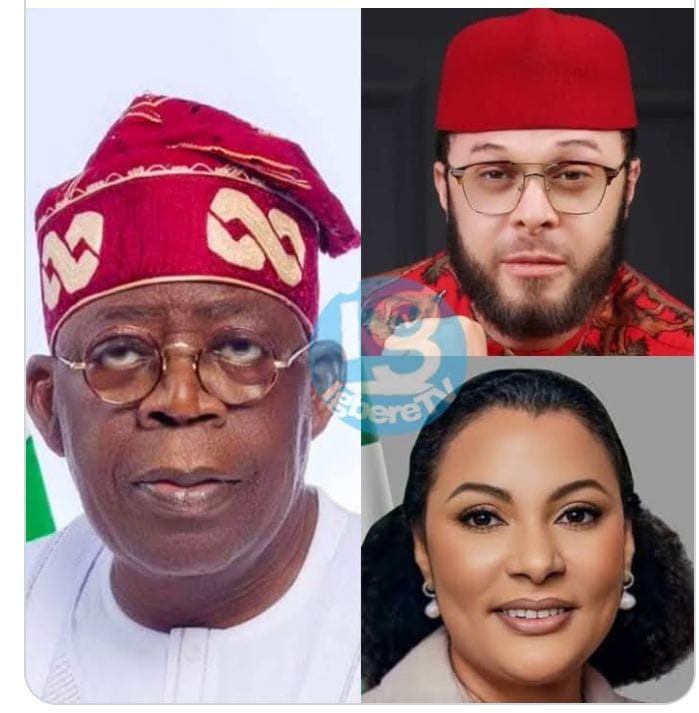
President Bola Tinubu has removed Dr. Doris Uzoka-Anite as Minister of State for Finance and appointed Mr. Taiwo Oyedele as her replacement, in a dramatic cabinet reshuffle that political observers are linking to last week’s explosive budget defence hearing.

The development comes exactly seven days after Hon. Alex Mascot Ikwechegh, member representing Aba North/Aba South Federal Constituency, confronted the Minister of Finance over ₦1.15 trillion in approved capital funds that remain undisbursed—with capital projects across Nigeria sitting at zero percent execution.

https://amzn.to/4rW4yZe

It was Wednesday, February 25th, when Hon. Ikwechegh—a member of the House Committee on Aids and Loans—took the floor at the Appropriation Committee’s budget defence session and began firing questions that would ultimately reverberate all the way to Aso Rock.

Armed with documents from his committee assignment, he laid out a disturbing pattern:

$1.2 billion Digital infrastructure

$500 million Economic stimulus

$500 million MSME support (Dec 2025)

$500 million (AfDB) Economic governance/Energy transition Approved Nov 2025

$21M + ¥15B + €4B Recent executive loan request

₦1.15 trillion 30% of 2025 capital budget Approved but Not Disbursed

Despite this avalanche of borrowed money and record-breaking revenues from agencies like FIRS and Customs, Hon. Ikwechegh noted that capital projects remained at zero disbursement.

“With all these funds put together… I want you to enlighten us on why the 2024 budget is yet to be fully implemented, and why the 2025 budget has only been funded 34%—most of which is recurrent expenditure.”

https://amzn.to/4rW4yZe

Then came the question that silenced the room:

“I want you to enlighten us on why our capital projects still remain at zero. Talking about our country. This is our country. Are you not in Nigeria? Why the capital of the Nigerian government remains at zero in 2026?”

When pressed, Minister of Finance Wale Edun shifted responsibility to his Minister of State, Doris Uzoka-Anite, claiming she handled disbursements.

The committee adjourned to Thursday, February 26th, summoning Uzoka-Anite to provide answers.

She appeared. She confirmed that ₦1.15 trillion was indeed approved. But she claimed “pre-disbursement conditions” had not been met by some ministries.

Hon. Ikwechegh was ready. He rose and asked:

https://amzn.to/4rW4yZe

“Mr. Chairman, can the minister tell this committee which specific ministry met all conditions and still did not receive funding? If none existed, why was ₦1.15 trillion approved when the government knew conditions weren’t met?”

The minister could not name a single ministry.

The room understood the implication: either the money was approved without proper verification, or it was being withheld without justification.

Speaking after the hearing, Hon. Ikwechegh framed the issue in stark legal terms:

“If this infraction is identified, it means there has been misappropriation of funds—which is a crime.”

At 3:30 PM on Tuesday, March 3rd—exactly one week after Hon. Ikwechegh’s initial interrogation—the presidency announced a cabinet reshuffle.

According to a statement by Bayo Onanuga, Special Adviser to the President on Information and Strategy, Uzoka-Anite has been moved to the Ministry of Budget and National Planning as Minister of State.

It is her third portfolio in two years, having previously served as Minister of Trade and Investment before her appointment to Finance.

Replacing her is Taiwo Oyedele, the 50-year-old economist and tax expert who chaired the Presidential Committee on Fiscal Policy and Tax Reforms. Oyedele, a 22-year veteran of PwC who rose to become Fiscal Policy Partner and Africa Tax Leader, now awaits Senate confirmation.

The official statement made no mention of the budget defence hearing or Hon. Ikwechegh’s interrogation.

But the timeline has left political observers drawing their own conclusions.

For ordinary Nigerians, this sequence of events demonstrates something rare: accountability in action.

A lawmaker asked questions. A minister could not answer. One week later, that minister was removed from her portfolio.

Hon. Ikwechegh’s constituents in Aba North and Aba South—a commercial hub—now see their representative making waves at the highest level.

When he asked, “Why the capital of the Nigerian government remains at zero in 2026?” —he was asking for the roads, hospitals, and schools that never got built despite approved funds.

Now, because of his questions, the nation is watching. And the government has responded.

Despite the cabinet reshuffle, the core question Hon. Ikwechegh raised remains unanswered:

Where is the ₦1.15 trillion?

If funds were approved by the National Assembly, borrowed from international lenders, and generated by revenue agencies—yet never reached the capital projects they were intended for—the legal implications are unavoidable.

https://amzn.to/4rW4yZe

As Hon. Ikwechegh himself stated:

“If this infraction is identified, it means there has been misappropriation of funds—which is a crime.”

The removal of a minister does not erase that question. It merely raises another:

Will there be further accountability
Atiku Refused To Step Aside As ADC Presidential Candidate

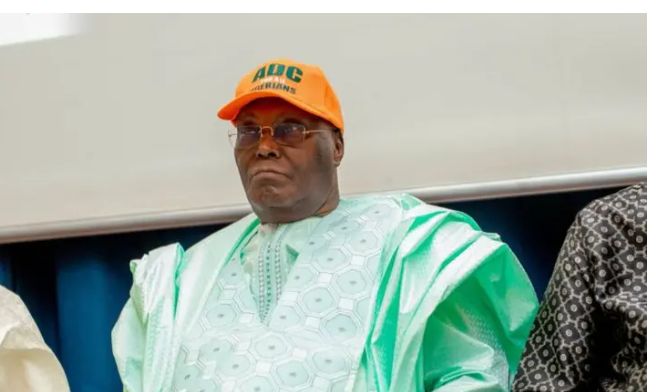
According to a report by Nigerian Tribune, on Wednesday January 7, 2026, former Vice President Alhaji Atiku Abubakar has described the African Democratic Congress (ADC) as being on a national rescue mission.

‎He said he and other committed leaders are central to this effort.

‎Atiku warned that any call, whether open or secret, for him to step aside from the presidential race would help authoritarian ambitions.

‎He said it would also betray the Nigerian people.

‎The former vice president made the declaration amid concerns that outside forces are trying to influence the ADC’s choice of a presidential candidate.

‎He accused agents linked to the ruling All Progressives Congress (APC) of meddling in the party’s affairs.

‎Atiku stated that the ADC’s mission is about protecting democracy and offering Nigerians a credible political alternative.

‎He said the party is focused on strengthening its structures across the country.

‎He insisted that no external pressure or intimidation will force him or other party leaders to step down.

‎According to Atiku, such actions would undermine democracy and favor one-party dominance.

‎The statement comes at a time when several politicians, including former Labour Party candidate Peter Obi, have declared interest in the ADC presidential ticket.

‎Atiku reassured that all aspirants will follow the party’s transparent process to select its flagbearer.

‎For Atiku, stepping aside is not an option, and the party’s focus remains on serving Nigerians.

‎“Let it be stated plainly: the ADC is on a national rescue mission. Former Vice President Atiku Abubakar, alongside other committed patriots, is central to this effort. Any call, overt or covert for Atiku to step aside is a gift to authoritarian ambition and a betrayal of the Nigerian people,” he said.

Natasha Akpoti : I was not Allowed To Speak

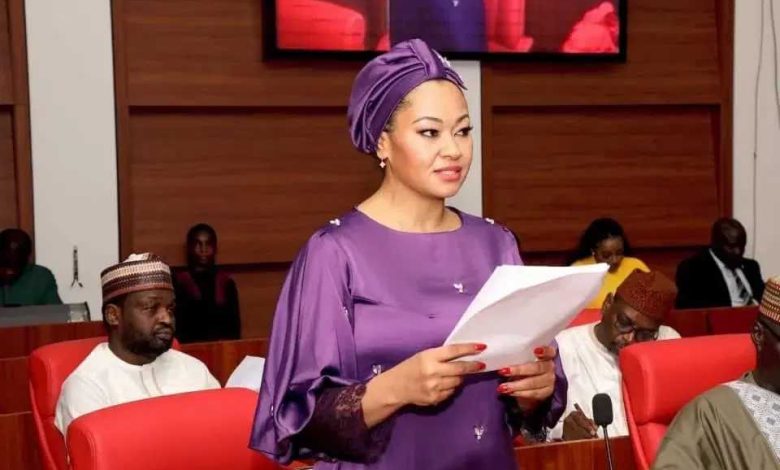
Senator Natasha Akpoti-Uduaghan, representing Kogi Central Senatorial District, expressed that she was not allowed to contribute during the screening of Professor Joash Ojo Amupitan, who was approved as the Chairman of the Independent National Electoral Commission (INEC).

She shared this information on Thursday during a live session on Facebook, providing updates to Nigerians and her constituents about the developments in the Red Chamber.

“I raised my hand, but I was not selected to speak. It’s understandable as the Senate President, Godswill Akpabio, has the prerogative to choose who speaks. All I wanted to say was that I was impressed with Professor Joash Ojo Amupitan’s credentials. His resume was quite impressive, contrary to the information circulating on social media. Also, this is the first time an indigene of Kogi State has been nominated as the INEC Chairman.”

Senator Akpoti-Uduaghan further highlighted that Professor Amupitan stated his intention to deploy electronic methods, particularly drones, to monitor the elections in 2027.

“The mention of drones caught my attention because, three months ago, while we were illegally suspended, we facilitated the training of 80 individuals in the use of drones, and we provided each of them with DGI drones. The DGI drones are among the best in the world. We appreciate that he is considering using drones for election monitoring, and Kogi Central is ready to provide the list of these 80 individuals so they can partner with the Police Force or INEC.”

Using the September 12, 2025, elections in Nepal, which utilised the Discord application as a reference, Senator Natasha inquired whether it would be better for Nigerians to vote from the comfort of their homes using their National Identification Number (NIN), voter’s card, or Bank Verification Number (BVN) for verification. She argued that this approach would mitigate the risks associated with insecurity and the deployment of election materials to rural areas that endanger lives. She emphasised that embracing technology could also help reduce the high costs of elections, allowing saved funds to be redirected towards healthcare, infrastructure, and other pressing needs for the populace.

“If Nigerians can vote for Big Brother and their votes are protected, we can also implement what Rwanda and other African nations have done. The advantage of going digital is that it would allow Nigerians in the diaspora to participate in voting. Wherever Nigerians are, they can be accredited using their voter’s card and cast their votes. Some platforms are not vulnerable to hacking, which could significantly reduce stress, protect lives, and enable the Nigerian Army to focus on other areas besides securing voters. So, how prepared is Professor Amupitan to embrace full digital voting to avoid wasting time and money on deploying personnel and printing materials for the 2027 elections?”

She expressed her satisfaction with Professor Amupitan’s nomination, despite initially being sceptical due to negative stories about his date of birth and primary education. After reviewing his Curriculum Vitae, she felt reassured about his appointment.

I Support 80% of FG and Tinubu’s Reform: Muhammad Sanusi

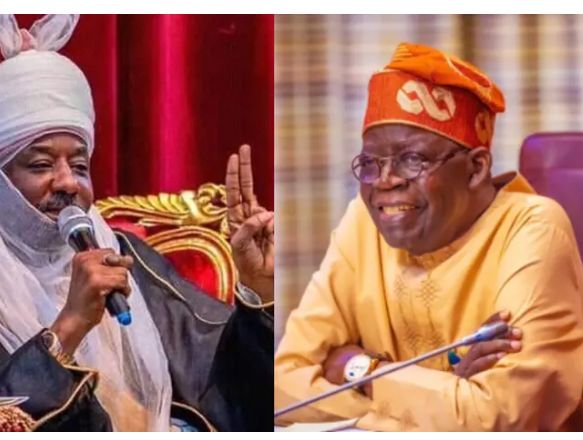
The Emir of Kano and former Governor of the Central Bank of Nigeria (CBN), Muhammad Sanusi II, said he agrees with about 80 percent of President Bola Tinubu’s policy direction but has reservations about certain aspects of fiscal management and food importation.

Speaking in an interview with News Central on Tuesday, Sanusi commended the administration for stabilising the economy through improved fiscal discipline and better monetary policy coordination.

“In terms of monetary policy and stability, I have nothing but commendation for the government. On the fiscal side, we have had an improvement in revenue-to-GDP ratios, improvement in debt service ratios, and a contraction in the deficit. These are positive steps, but we still have a long way to go,” he said.

The former CBN governor, however, noted that while the government had made commendable progress in revenue generation, it must pay closer attention to the quality and efficiency of public spending.

“I would like to see a better look at fiscal expenditure. We’re still spending too much money on government — on the cost of governance, too many political appointees, too many officers,” Sanusi said.

“If we do not improve the quality of spending and put a rein on expenditure, we’re going to continue borrowing.”

He warned that Nigeria could fall back into a debt trap if it failed to manage its post-subsidy savings prudently.

“After saving money from these expensive subsidies, after building up the government balance sheet, you go and spend it, and then you have to borrow again,” he cautioned. 

“So we still have some steps to go on the fiscal side, but the first thing was to fix revenue, and I think with the tax reforms and what you’ve seen so far, the fiscal side is on its way.

Sanusi also called for structural reforms in agriculture, describing the government’s policy on food importation as counterproductive.

“I would like to see that we put a stop to the mass importation of food. I know it was driven by a desire to bring down food prices, but it is, in the end, very counterproductive to domestic production and domestic producer prices,” he said.

According to him, Nigeria must focus on strengthening its agricultural value chain to boost local food production and achieve sustainable food security.

“Hopefully, we will get to a point where we go back on track with the reforms in the agricultural sector — fixing the agricultural value chain and relying on domestic production to feed the nation,” he said.

Summing up his assessment, the Emir of Kano said the administration had made significant strides despite the country’s economic challenges.

“All in all, I think I would say 70 to 80 percent of what the government has done and the direction it is on, I support,” Sanusi stated. 

“I do have some reservations about one or two things, like the importation of food and the quality of expenditure and the nature of overheads, but I think we’re on the right path… we’ve come very far in the right direction.”

Dangote Petrol Free Scheme Delivery Continues

Dangote Petroleum Refinery and Petrochemicals Limited has suspended self-collection gantry sales of petroleum products at its facility, effective Thursday, September 18, 2025.

The directive, contained in an internal mail obtained by Punch on Friday, was issued by the Group Commercial Operations Department of the company.

According to the refinery, the decision is aimed at strengthening its free delivery scheme for retail outlets and curbing sales to unregistered marketers, whether directly from the depot or indirectly through middlemen.

In its message to marketing partners, the company said, “We wish to inform you that, effective 18th September 2025, Dangote Petroleum Refinery and Petrochemicals FZE has placed all self-collection gantry sales on hold until further notice.

“In  light of this development, we kindly request that all payments related to active PFIs for self-collection are also placed on hold until further notice. Please note that any payment made after this date will not be honoured.”

Dangote assured that the Free Delivery Scheme remains operational for both existing and newly onboarded customers.

“We encourage all active and newly onboarded customers to register for the DPRP Free Delivery Scheme, which remains fully operational and offers a seamless delivery experience to your station,” the company added.

The management also apologized partners for any inconvenience caused by what it described as an “operational adjustment.”

The suspension comes amid ongoing disputes between the refinery, the Nigeria Union of Petroleum and Natural Gas Workers (NUPENG), and the Depot and Petroleum Products Marketers Association of Nigeria (DAPPMAN).

NUPENG has accused Dangote of resisting the unionisation of its truck drivers despite a government-brokered agreement, while DAPPMAN has criticised the refinery’s free delivery scheme, claiming marketers are being forced to rely on Dangote’s fleet at commercial rates.

 In its defence the refinery argued that the scheme was designed to stabilize supply and cut costs, while accusing marketers of pushing for subsidies and fuelling diversion.

The refinery’s new policy is expected to have significant implications for independent petroleum marketers and retail operators who depend on direct self-collection at the gantry but are not yet signed up to the free delivery scheme.

On Thursday, Dangote Petroleum Refinery reaffirmed its stance on the ongoing dispute with DAPPMAN, insisting that it would not absorb logistics costs, which marketers are seeking to pass on as subsidies.

 In a statement shared on its official 𝕏 account and signed by management, the company said, “We stand by our statement on DAPPMAN… Marketers’ ₦1.505trn Subsidy Demand.”

The statement added that the refinery reserved the right to defend its operations against what it described as misleading reports.

The face-off comes at a time of mounting public concern over fuel prices and distribution logistics. DAPPMAN, which controls most of Nigeria’s privately operated depots, has argued that transporting products from the refinery’s Lagos base to other parts of the country involves significant logistics and coastal shipping costs.

Emefiele defeats EFCC in Court

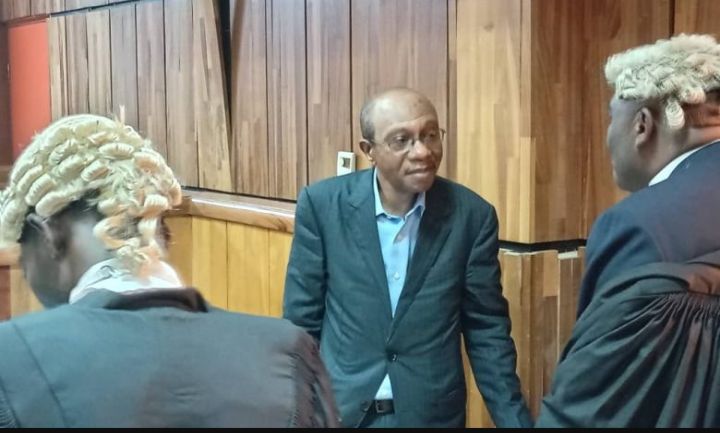
The Lagos State Special Offences Court in Ikeja has granted Godwin Emefiele, former governor of the Central Bank of Nigeria (CBN), permission to engage forensic experts to examine WhatsApp conversations and a mobile device tendered as evidence in his fraud trial.

Ruling on Monday, Rahman Oshodi, the presiding judge, gave the order after Emefiele’s counsel, Olalekan Ojo (SAN), applied for leave to allow an independent forensic expert to inspect the handset, marked “iPhone 2,” and verify the authenticity of the extracted WhatsApp messages already admitted as exhibits.

The defence seeks the court’s leave to call a forensic expert to examine both the mobile device and printed conversations allegedly linked to the defendants,” Ojo told the court.

Emefiele is standing trial alongside his co-defendant, Henry Omoile, on 19 counts bordering on abuse of office, receiving gratification, corruption, and fraudulent property transactions involving $4.5 billion and N2.8 billion.

The charges were filed by the Economic and Financial Crimes Commission (EFCC.

However, Chineye Okezie, counsel to the EFCC, opposed the application, arguing that exhibits admitted during trial should remain in the court’s custody until proceedings are concluded.

She faulted the defence for failing to disclose the name of the forensic laboratory or the qualifications of the personnel expected to handle the device.

Okezie urged the court to mandate that the EFCC’s director of the forensic department select the laboratory, ensure the exercise is monitored by a prosecution-nominated representative, and preserve the chain of custody.

Delivering his ruling, Oshodi held that the defence was entitled to an independent forensic review provided safeguards were in place to protect the integrity of the evidence.

He ordered that the inspection be conducted in the presence of representatives from all parties, with each side allowed to bring one lawyer and one forensic expert.

A court representative will supervise the exercise, which must take place between 10 a.m. and 2 p.m. on September 24 and 26, 2025.

The judge directed that the chain of custody of Exhibit E (iPhone 2) must be preserved and that the device remain in the court’s custody at all times.

The trial was adjourned to October 7 and 8 for continuation, and October 9 for further hearin

Dangote: Ajaokuta Steel Company Cannot Work

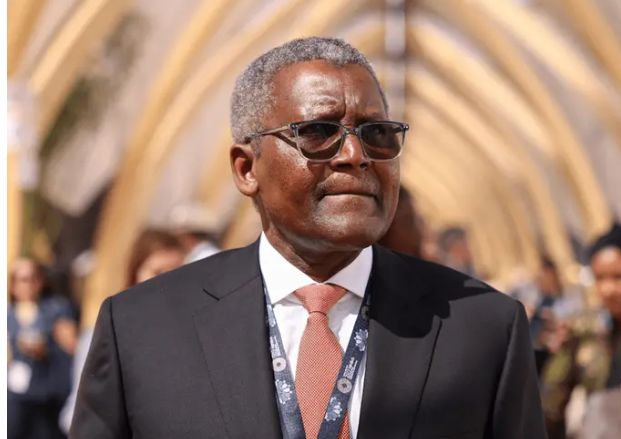
According to an interview by TVC news, Africa’s richest man and Chairman of the Dangote Group, Aliko Dangote, has cast doubt on the future of Nigeria’s long-abandoned Ajaokuta Steel Company, insisting that the project is no longer feasible. Speaking on the sidelines of an industry forum, Dangote bluntly declared that despite decades of promises and billions of naira sunk into the plant, Nigerians must face the reality that Ajaokuta may never deliver the dream of industrial revolution once attached to it.

“Ajaokuta Steel Company will not work. We can keep deceiving ourselves and keep being passionate about it, but it’s not possible,” Dangote stated. His remarks challenge the long-standing narrative by successive governments that the steel complex holds the key to unlocking Nigeria’s industrial and infrastructural growth.

Located in Kogi State, Ajaokuta Steel was initiated in the late 1970s with the vision of making Nigeria self-sufficient in steel production. Decades later, the plant remains incomplete, with repeated attempts at revival failing to yield results. Dangote, who has built one of Africa’s largest conglomerates spanning cement, sugar, and petroleum refining, argued that the global steel market has moved far ahead, and Nigeria’s attempts to resurrect Ajaokuta may simply be chasing shadows.

redirect its focus toward realistic and competitive ventures in manufacturing and infrastructure, rather than pouring scarce resources into a project that has been riddled with corruption, mismanagement, and outdated technology. According to him, the plant’s design and equipment, conceived in the 1970s, are now obsolete and may cost more to upgrade than to start afresh with modern alternatives.

Dangote’s comments have already sparked reactions among industry stakeholders. Some agree that it is time for Nigeria to accept the hard truth and pursue new models of industrialization, while others insist that abandoning Ajaokuta would represent a betrayal of national aspirations.

For decades, politicians have campaigned on promises to revive the steel plant, often portraying it as the backbone of Nigeria’s economic transformation. Yet, despite repeated interventions, not a single bar of steel has rolled out of its facilities.

Dangote concluded by urging policymakers to confront reality with courage: “We must stop deceiving ourselves. The future of Nigeria’s industrial growth lies not in outdated dreams, but in innovative, competitive, and forward-looking projects

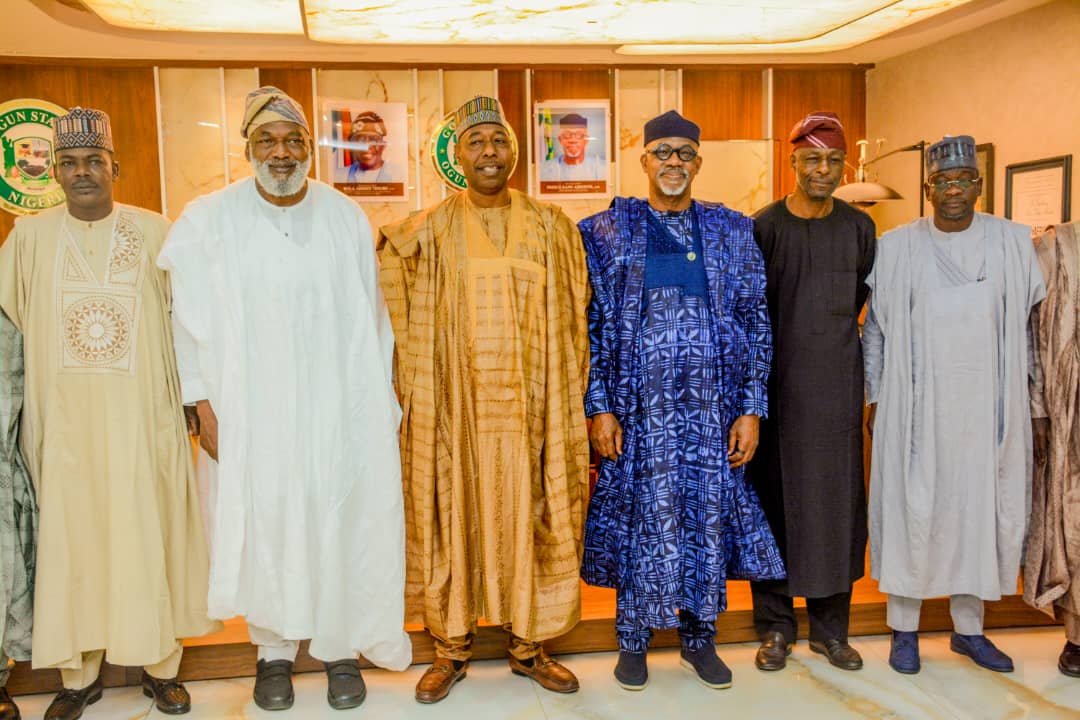
Awujale: Zulum Visits Abiodun, Condoles Monarch’s Family

Borno State Governor, Prof. Babagana Zulum has described the late Awujale of Ijebuland, Oba Sikiru Kayode Adetona, as one of the top monarchs whose contributions helped in the socio-economic development of the country.

Governor Zulum stated this when he led the state delegation on a condolence visit to Governor Dapo Abiodun and two sons of the late Awujale at the Governor’s Office, Oke-Mosan, Abeokuta, on Tuesday.

He said the demise of the revered Oba was not only a great loss to Ogun State but also to the government and people of Borno State, as the personality and dignity of the Awujale were never in doubt.

He said: “The relationship with the people of Borno and the entire people of Southwestern Nigeria cannot be overemphasized. We have a lot of commonalities in terms of our traditions, culture, and much more.

“We cannot sit at home and commiserate with the government and people of Ogun State over the telephone; that is why we decided to come.

“The Awujale was a good man. There is nothing we can say other than wish him well, and may his family find the fortitude to bear this irreparable loss.”

He acknowledged the efforts of Governor Abiodun in building bridges of unity across political and ethnic divides through visits to various regions of the country.

Responding, Governor Abiodun noted that the late paramount ruler of Ijebuland was a man who lived a life of principle, integrity, and dedication to the people he served.

According to the governor, the late Oba Adetona, through his fair dealings with adherents of all religions, brought religious harmony to Ijebuland and treated all his subjects equally.

“He was so principled that he would call a spade a spade and was like that until the end. Kabiyesi was a great man; he meant something to everyone. He was a father to every one of his subjects,” he said.

While appreciating the Borno State governor for taking the time to visit the state, Governor Abiodun disclosed that Prof. Zulum was the first person he informed about the death of the Awujale while they were in London to see the late President Muhammadu Buhari.

“I am deeply touched by your gesture. I can’t find enough words to describe how moved I am by your very humane gesture.

“You have shown me dedication and compassion. This has shown that you are connected to us in Ogun State. Ogun and Borno have a lot in common in terms of history and tradition.

“You felt that you were duty-bound to come and commiserate with us, and this is nothing but a rare gesture of love, compassion, and brotherhood; for this, I thank you,” the governor added.

In his remarks, the first son of Oba Adetona, Prince Adesire Adetona, expressed surprise at the level of recognition his father’s death has received in the country, noting that the visit of the Borno State delegation was an indication that Nigerians are with the family during this trying time.

He appreciated Governor Abiodun and his government for giving his father a befitting burial and the people of Ogun State for their show of love.